
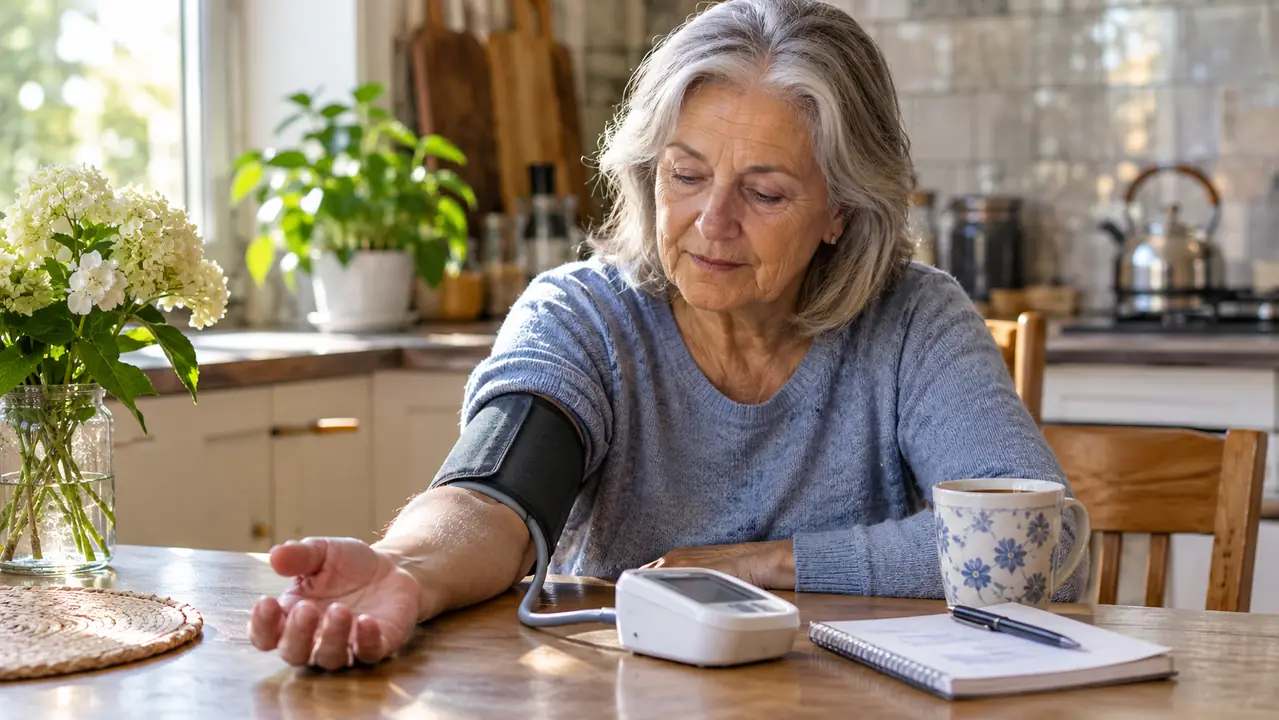
The nurse took my blood pressure three times at my last checkup. She frowned at the first number, waited a minute, tried again, then tried a third time. Then my doctor asked a question I had no answer for: what does it run when you check at home? I had never checked at home. So he asked me to do it twice a day for a few weeks, write every reading down, and bring the log back to him. That is how a blood pressure monitor ended up in my kitchen drawer next to the potholders. I am 67, retired after thirty-one years as a bank teller in Lawton, Oklahoma, and I learned all of this from scratch. The monitor I settled on is the A&D Medical UA-767F.
I picked it for a boring reason. I wanted an upper arm cuff, not a wrist one, because that is what the nurse used and I did not want to compare apples to oranges. I wanted something my husband Gene could use too, since he is 70 and his doctor asks him the same questions. And I wanted a brand I had actually heard of. A&D Medical kept coming up in the reviews I read, the box said the cuff would fit both of us, and nothing about it looked like it needed a class to operate. That last part matters more than I expected.
I am not a gadget person. I balanced a checkbook by hand for thirty-one years and I still write checks at the grocery store. What I wanted was a machine that told me two numbers and did not ask me to learn anything else. That is most of why this one worked out for me, and it is also where its limits are, which I will get to.
The Quick Verdict
Plain, patient, and consistent. One button, oversized numbers, and a cuff wide enough for my husband's arm. Months in, I still use it twice a day without thinking about it.
Amazon Check Today's Price →One button, big numbers, and a cuff that fit both of us
If your doctor asked for home readings, this is the machine I would hand you. Upper arm cuff, oversized numbers you can read without your glasses, and nothing to set up before your first reading.
Amazon Check Today's Price on Amazon →How I've Used It
My routine has not changed since the first week. I sit at the kitchen table, feet flat on the floor, left arm resting on the table at about heart height, cuff on the bare upper arm. Morning reading before coffee, evening reading before dinner. I take one, wait a minute, take another, and write both in a spiral notebook with the date and the time beside them. The whole business takes about three minutes, and most of that is sitting still.
Gene uses it three or four evenings a week. He is not as disciplined about it as I am, which he will admit. The listing says the monitor handles up to four users, though we only need two. What matters to me is that the same cuff goes around his arm without a fight. His arm is a good deal bigger than mine and neither of us has to hunt for an extension or a different size at nine at night.
The first week was the learning week. The cuff squeezes harder than the one in the doctor's office, and the booklet explains why, but it still surprised me. My first four readings were probably not my best work: I had my arm wrong, I had talked through one of them, and I had crossed my ankles without noticing. By day eight it was automatic. That is the part I would tell anyone: give it a week before you judge the machine or the numbers.
What One Button Means at Six in the Morning
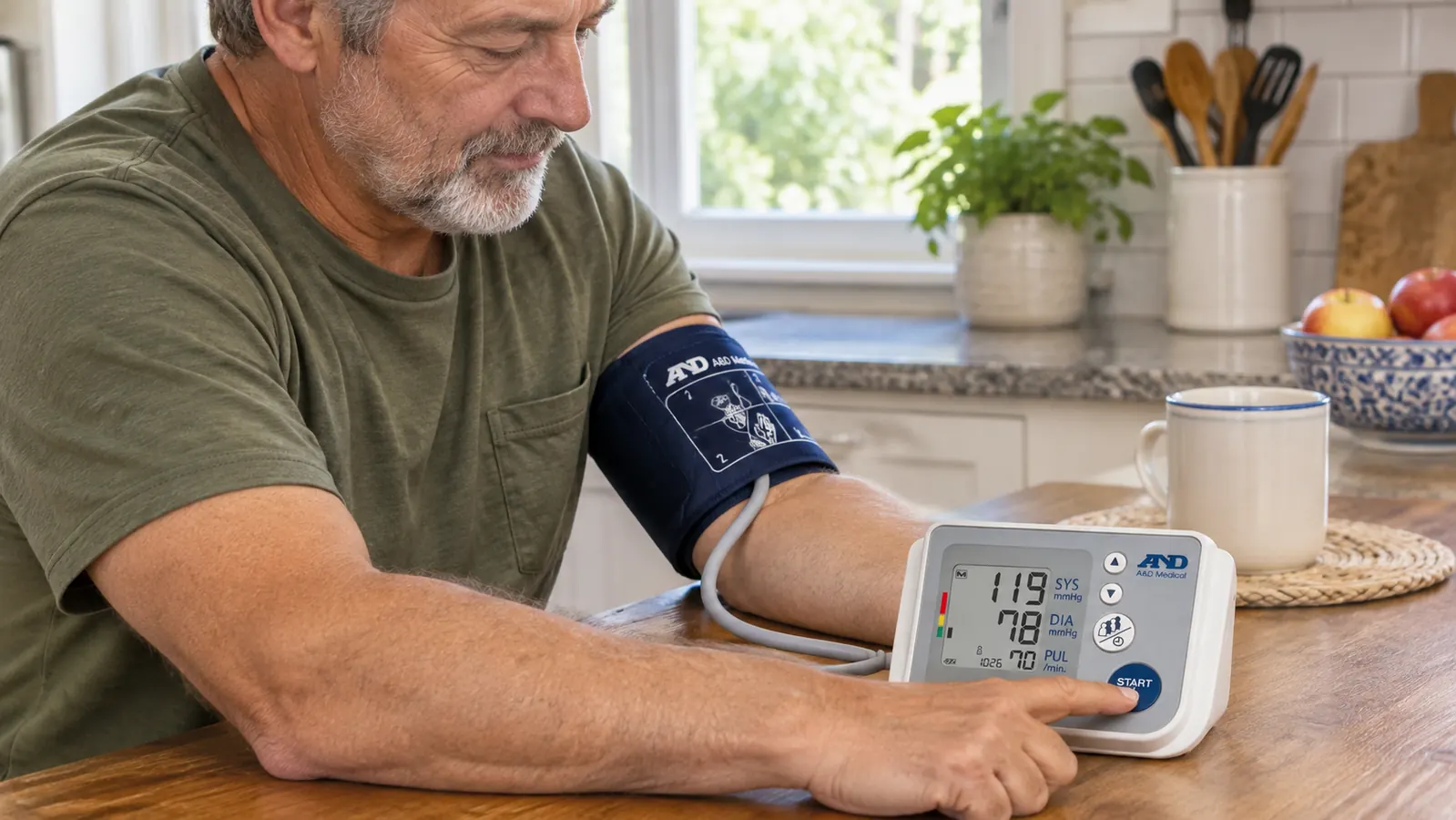
There is one button on the front. You put the cuff on, you press it, and it goes. No menu. No scrolling through settings while you are still half asleep and the coffee has not started. The screen shows oversized numbers, which sounds like a small thing until you are 67 and your reading glasses are still on the nightstand. I can read mine from across the counter.
It runs on batteries, and one came in the box, so there was nothing else to buy before the first reading. It weighs nine ounces, so it lives in the kitchen drawer without pulling the drawer off its track when I open it. It is plastic and light and mine has been knocked onto the tile once, and it still works fine. I keep a spare set of batteries in the same drawer, mostly because I do not want to be hunting for them on a morning when I am already running late.
The one thing I had to learn was the cuff placement, not the electronics. Where the tube sits, how tight the band should be, whether the cuff goes over a sleeve, which it should not. That is all on the quick start sheet, and once you have done it ten times you will not think about it again.
The Cuff, and Why I Measured Gene's Arm With a Tape Measure
The box says the cuff fits 8.6 to 16.5 inches. Before I ordered, I wrapped a fabric tape measure around Gene's upper arm the way the instructions describe and wrote the number on the back of an envelope. He was well inside the range. Mine sits closer to the bottom of it and still fits properly. Two people, one cuff, no argument.
If you fall outside that range, A&D Medical sells separate cuffs. There is a small UA-289A for 6.3 to 9.4 inches, a medium UA-290A for 9.0 to 14.6 inches, and a UA-291A as well. I mention it because the complaint I ran into most often when I was reading reviews of home monitors, any brand, was a cuff that did not fit. That is a five minute problem to solve before you order instead of a return after.
Measuring your own arm is the awkward part. I did mine in the bathroom mirror with the tape pinched between two fingers and it took three tries to get a number I trusted. If you have somebody in the house, have them do it for you. It is the single most useful thing you can do before you spend money on any monitor, this one included.
What I Compared Before I Ordered
I looked at three kinds before I settled. Wrist monitors were the first thing I ruled out. They are smaller and easier to carry, and for travel they probably make sense for some people. What I did not trust was my own ability to hold my wrist at the right height every single time, especially at six in the morning. The nurse at my doctor's office said something along the same lines without my even asking, which settled it for me.
The second kind was the connected ones, the monitors that send your readings to your phone. Half the reviews I read were about the app and not the cuff, and the app reviews were the angry ones. I am sure some of those monitors are very good. I did not want to troubleshoot a phone at six in the morning in order to take a blood pressure reading.
The third was the inexpensive no-name monitors, and I will admit I was tempted. What stopped me was the cuff sizing. A monitor is only as good as the band around your arm, and the cheap ones tended to come in one size with no path to another. A&D Medical publishes the cuff sizes and sells them separately, and the box carries a five year limited warranty in the USA. That was worth more to me than the cheaper option for something I use twice a day.
What a Few Months of Readings Look Like on Paper
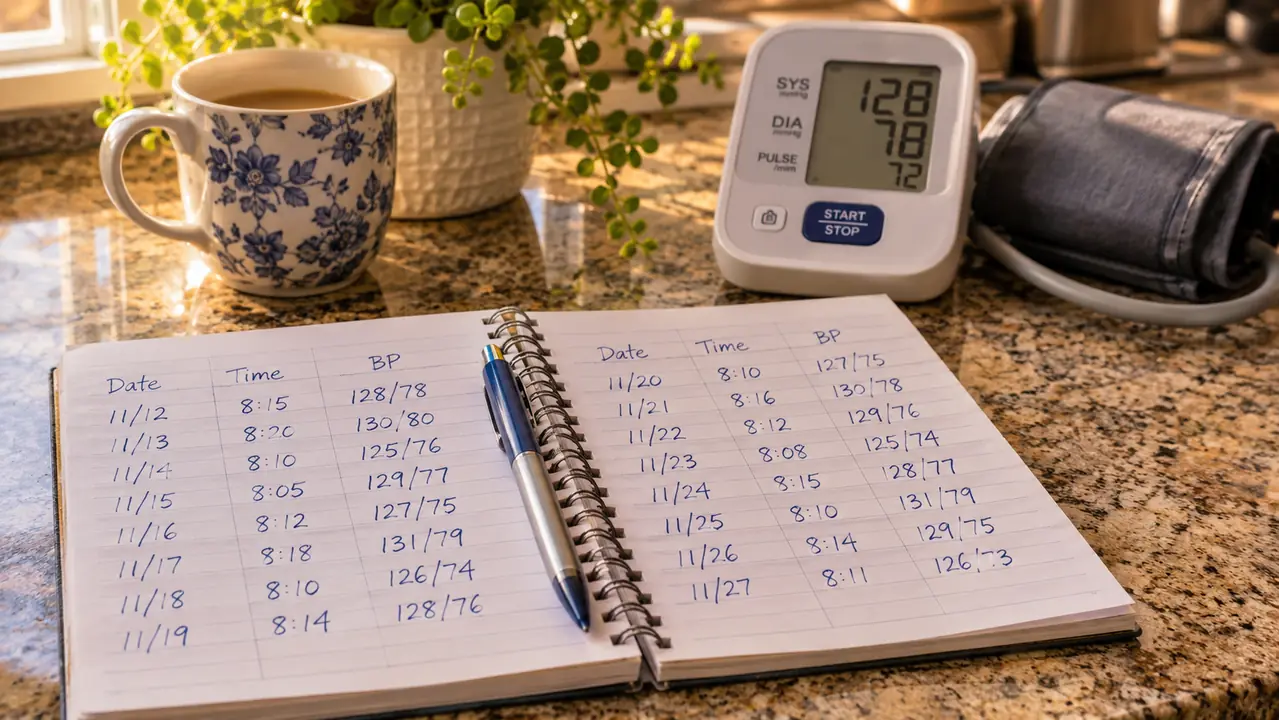
The notebook is the real record. Mine is a spiral from the drugstore with a column for the date, a column for the time, a column for the two numbers, and a note column where I write things like slept badly or walked the loop twice. That note column has turned out to be the most useful part of the page.
My mornings and my evenings do not match. Morning tends to run higher. Evening, after dinner, is usually lower. I am not offering a diagnosis and I would not want anybody to read it as one. It is simply what my own handwriting shows over a couple of months, and it is the kind of thing one reading in one chair at one appointment cannot show you.
There are two dates I would point to if you handed me the notebook. One was a morning after a bad night of sleep, and the other was an evening after a long afternoon of yard work in the heat. I am not going to put the numbers in a review, because they are mine and they belong in a conversation with my doctor. But I will tell you that having them written down is what made that conversation possible.
I brought the notebook in at my next visit. My doctor flipped through it, asked about two dates in particular, and we talked about what to keep an eye on. Having the paper in my hand changed the conversation. Instead of guessing at what my pressure does during a normal week, we were looking at what it actually did during mine. Then he sent me home to keep going, which is the other thing worth saying: the log did not end after three weeks.
Where It Gets on My Nerves
The cuff is stiff out of the box and takes a few weeks to soften up. My first dozen readings were not comfortable, and I said so to Gene more than once. It is better now, but nobody should expect it to feel like the cloth cuff the nurse uses on the first try.
The instruction booklet is written for somebody who already knows the vocabulary. I read it twice and still had Gene help me with the positioning section. The quick start sheet in the box is the friendlier document. Start there and use the booklet as a reference, not as something to read cover to cover.
The machine's job is the reading. Your job is the record. That is worth being honest with yourself about before you buy, because a monitor that takes a beautiful reading you never write down is not doing your doctor any good. If you know you will not keep a notebook, ask your doctor's office whether they have a printable log, or use the notes app on your phone. But keep something.
What I Liked
- Cuff covers 8.6 to 16.5 inches, so one monitor worked for both of us
- One button and oversized numbers, easy at six in the morning
- Upper arm cuff, the same style my doctor's office uses
- Battery included, so it worked straight out of the box
- Five year limited warranty in the USA
- Nine ounces, light enough to live in a kitchen drawer
Where It Falls Short
- Cuff is stiff for the first few weeks
- Booklet assumes you already know the vocabulary
- The record keeping is on you, not the machine
- One function only, with nothing extra
Eight weeks of my own handwriting told my doctor more than a single afternoon in his office ever could.
Who This Is For
This is for the person whose doctor asked for home readings and who wants the simplest possible way to get them. Especially if two people in the house need to check, or if the person doing the checking is older and does not want to learn a menu system. If you want big numbers, one button, and an upper arm cuff, the A&D Medical UA-767F does that without asking anything else of you.
It is also for the person who will actually bring the numbers in. The monitor is half the job. The log is the other half.
Who Should Skip It
Skip it if your upper arm is outside 8.6 to 16.5 inches and you do not want to order a second cuff. Measure first, before you order, with a fabric tape and the sizing instructions in front of you.
Skip it if you want charts, graphs, or a phone app, because this is a plain machine: one button, a reading on the screen, and that is where it stops. And skip it if the idea of writing numbers in a notebook makes you tired, because that part is not optional when the whole point is a log for your doctor. The machine is not the hard part. The habit is.
Get the readings your doctor asked for, starting tomorrow morning
Batteries are in the box and the cuff fits 8.6 to 16.5 inches. Measure your arm once, order once, and start the notebook this week.
Amazon Check Today's Price on Amazon →