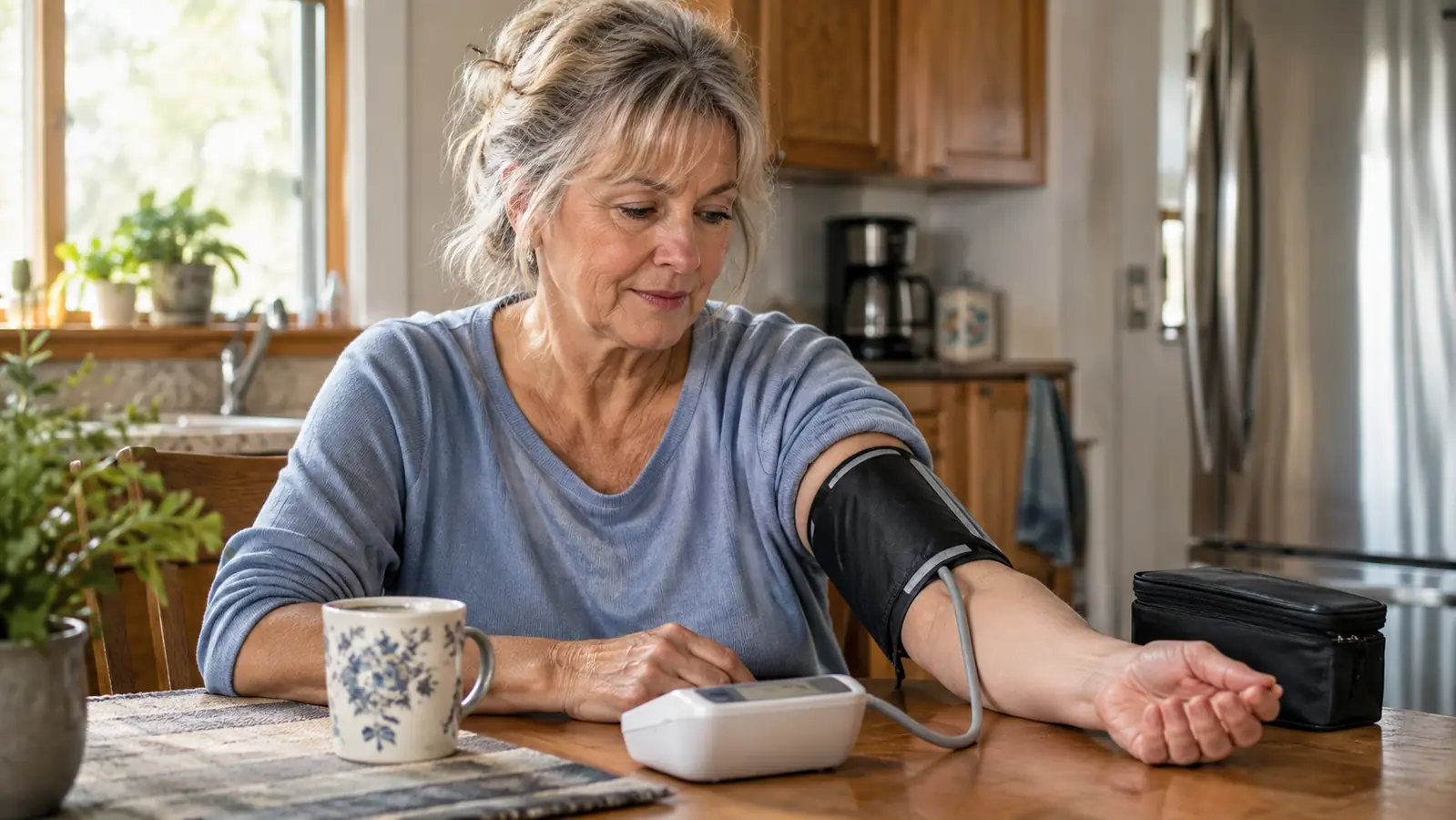
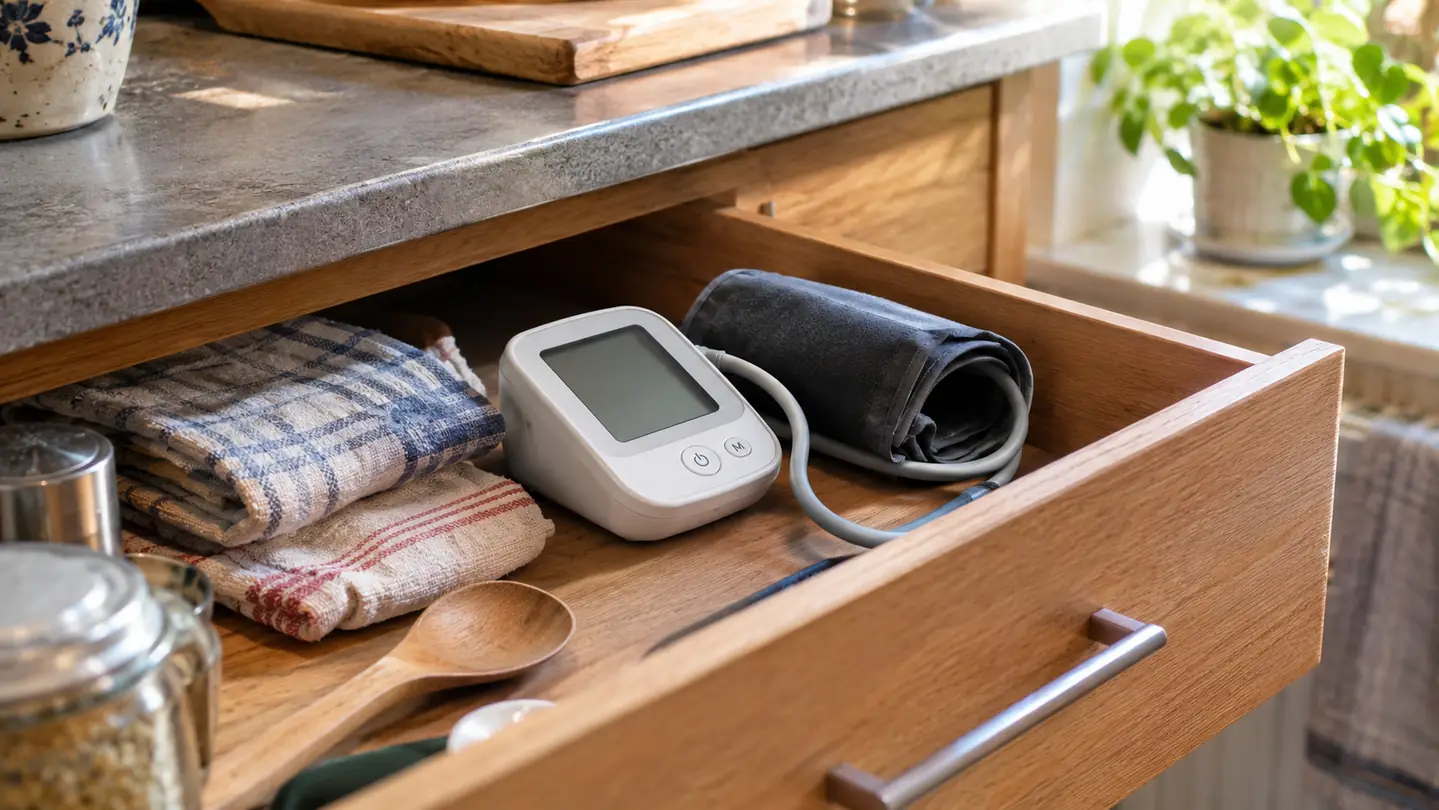
Gene and I have a kitchen table, two chairs, and a small routine. Before coffee in the morning, and again after supper, I sit down, roll up my sleeve, and put the cuff on my arm. My doctor asked me to do that for a few weeks and bring the log in. That is how the Withings BPM Connect ended up in our kitchen drawer instead of on a shelf somewhere. It has been in there long enough now that I know what I like about it and what I do not.
I am not a nurse. I am a retired bank teller in Lawton, Oklahoma, and I learned this the way most people do, one confusing manual at a time. So this is not a clinical opinion. It is ten plain reasons the Withings cuff stayed on our table after the first month, plus an honest note about what it does not do well. Nothing here is medical advice. Whatever the numbers say goes to your doctor, not to me. I will tell you what the machine does and what it does not, and you can take the rest to somebody with a license.
The cuff that was still in our drawer after the first month
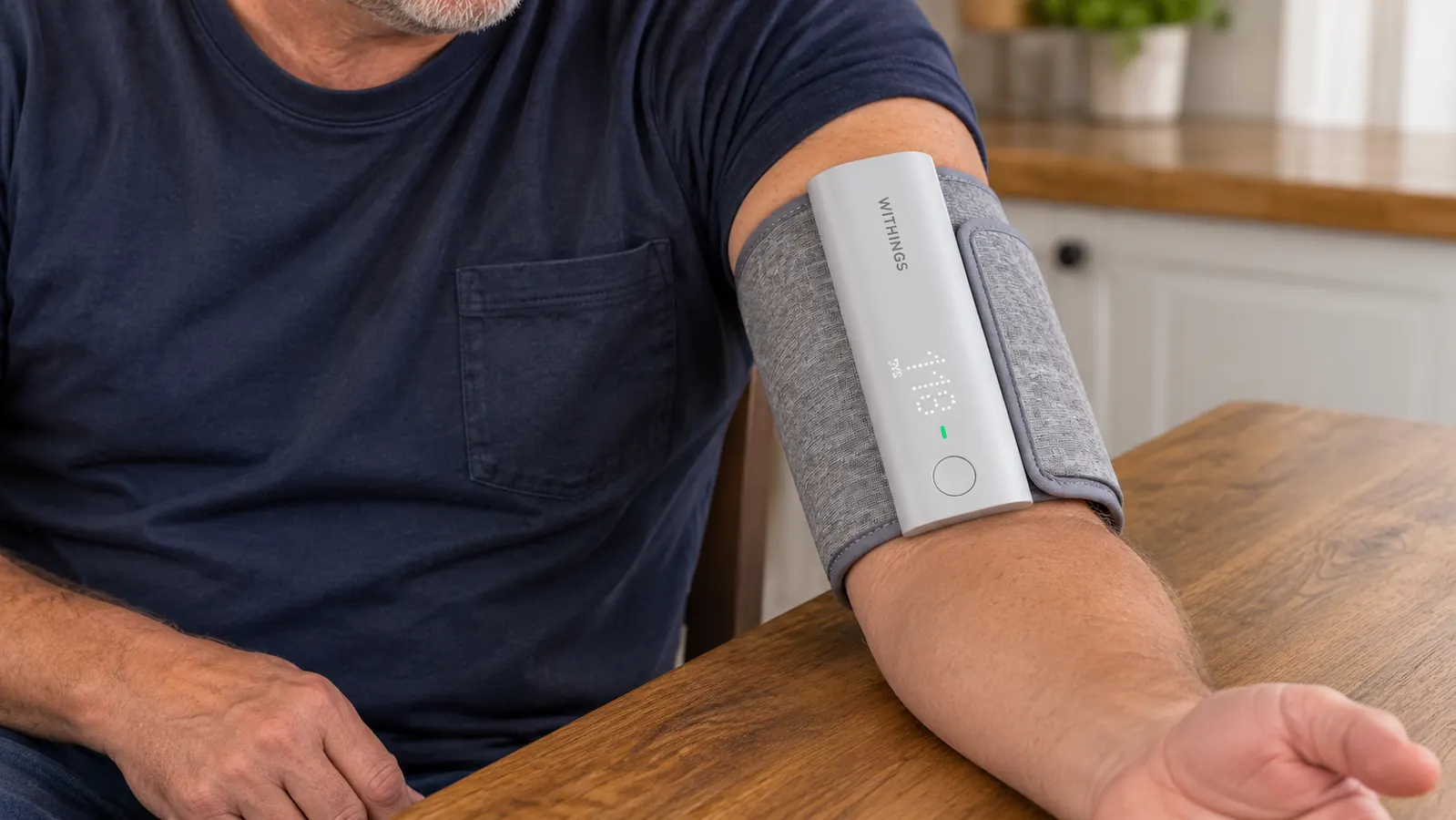
Battery powered, reads on the device itself, and syncs over Wi-Fi to the Health Mate app. The band runs 22 to 42 centimeters, which covers most adult arms.
Amazon Check Today's Price on Amazon →The numbers show up on the cuff, in letters I can actually see
I wear reading glasses and I lose them constantly. The Withings monitor has an LCD screen right on the device, so when the cuff finishes I look down at my own arm and there the reading is. No phone, no app, no leaning across the table to squint at something small. The display also gives color coded feedback, which is the closest thing to a plain answer the machine offers. I still take the numbers to my doctor. I just do not have to hunt for my glasses first.
One band spans 22 to 42 centimeters, so Gene and I share it
Gene is 70 and his arm is thicker than mine. The band on this cuff runs 22 to 42 centimeters, so it covers both of us without buying a second machine. We keep one cuff in the drawer and take turns with it. The only thing we argue about is who forgot to put it back, and that is not a product problem. If you are shopping for a couple, measure both arms first. It is a five minute job with a tape measure and it saves a return.
Battery power means no cord hunt before coffee
It runs on battery power and comes with a charger. That sounds like a small thing until you have moved a monitor around a kitchen looking for an outlet behind the toaster. Ours sits on the table, does its job, and goes back in the drawer. Nothing to plug in, nothing stretched across the floor on the way to the coffee pot. If you are unsteady on your feet in the morning, a cord across a kitchen floor is not a small thing at all.
Wi-Fi sync files the reading before I stand up
The cuff automatically syncs wirelessly to the Health Mate app over Wi-Fi. That is the part I did not expect to care about and now would not give up. My doctor wanted a few weeks of morning and evening readings to look at. Without sync, that means a notebook and my handwriting, which is not what it was. With the Withings setup, the reading is filed by the time I have pushed my chair back from the table. One feature, and it is the reason I kept going past week one.
Systolic and diastolic come back in one pass
It measures systolic and diastolic and shows them together on the display. I do not run it twice. I do not press anything twice. One inflation, one set of numbers, then I decide whether it is a good morning or a morning worth mentioning to my doctor. When something takes less than a minute start to finish, I am a lot more likely to do it twice a day for three weeks straight.
It is an FDA cleared upper arm cuff, which is what my doctor asked for
When I started this, I did not know there was a difference between a wrist cuff and an arm cuff. My doctor asked for upper arm, and that is what this is: a portable automatic upper arm monitor, and it is FDA cleared. I am not qualified to tell you which kind you need. I am telling you to ask the question, because the answer changes what you should be shopping for before you spend a dime.
At 12.8 ounces and 6.1 inches long, it disappears into a drawer
The monitor is 6.1 inches long, 2.36 inches wide and 2.16 inches thick, and it weighs 12.8 ounces. That is small enough to live in the drawer with the dish towels instead of sitting out on the counter like an appliance. In a small one-story house, counter space is real estate. I do not want a medical device on my counter reminding me to worry while I am making toast.
Bluetooth covers the evenings the Wi-Fi misbehaves
The sync works over Wi-Fi and Bluetooth. Ours runs on the house Wi-Fi, but on the nights the router decides to sulk, the cuff still pairs with my phone directly. I have used that more than once. A routine is only as good as its worst night, and this is the difference between a habit that survives a bad router and one you quietly stop doing in the second week and never mention again.
A two year manufacturer warranty on something you handle twice a day
The listing carries a two year manufacturer warranty. Twice a day, every day, is a lot of handling for a small piece of equipment, and knowing there is a warranty behind it takes some of the sting out of keeping it in a drawer where a spoon can land on it. I have not had to use it. I like that it exists. That is about as much as anyone can honestly say about a warranty.
More than 16,000 reviews and a 4 star average, which means the complaints are there to read
The Withings BPM Connect has more than 16,000 reviews and a 4 star average. That is not a perfect score and I would rather you knew it before you buy than after. Read the one and two star reviews on anything, this included. Some people struggle with the app setup. Some people want features it does not have. Those reviews will tell you more about whether it fits your house than mine will.
What I'd Skip
I would skip the wrist cuff that looks more convenient on the shelf, unless your doctor says otherwise. I would skip the paper notebook if you have sync, because two readings a day for three weeks is more numbers than a person keeps straight by hand. And I would skip reading too much into one high morning. One reading is one reading. The pattern is the thing, and the pattern is what your doctor wants to see. The Withings cuff is good at collecting that pattern quietly and getting out of the way. It is not good at telling you what the pattern means, and it should not be asked to.
Two readings a day for three weeks is somewhere north of forty numbers. I have never once written one of them down by hand.
If your doctor asked you to check at home, this is a sensible place to start
Upper arm cuff, 22 to 42 centimeters, reads on the device, syncs over Wi-Fi or Bluetooth to the Health Mate app. Bring the numbers to your doctor and let them tell you what they mean.
Amazon Check Today's Price on Amazon →