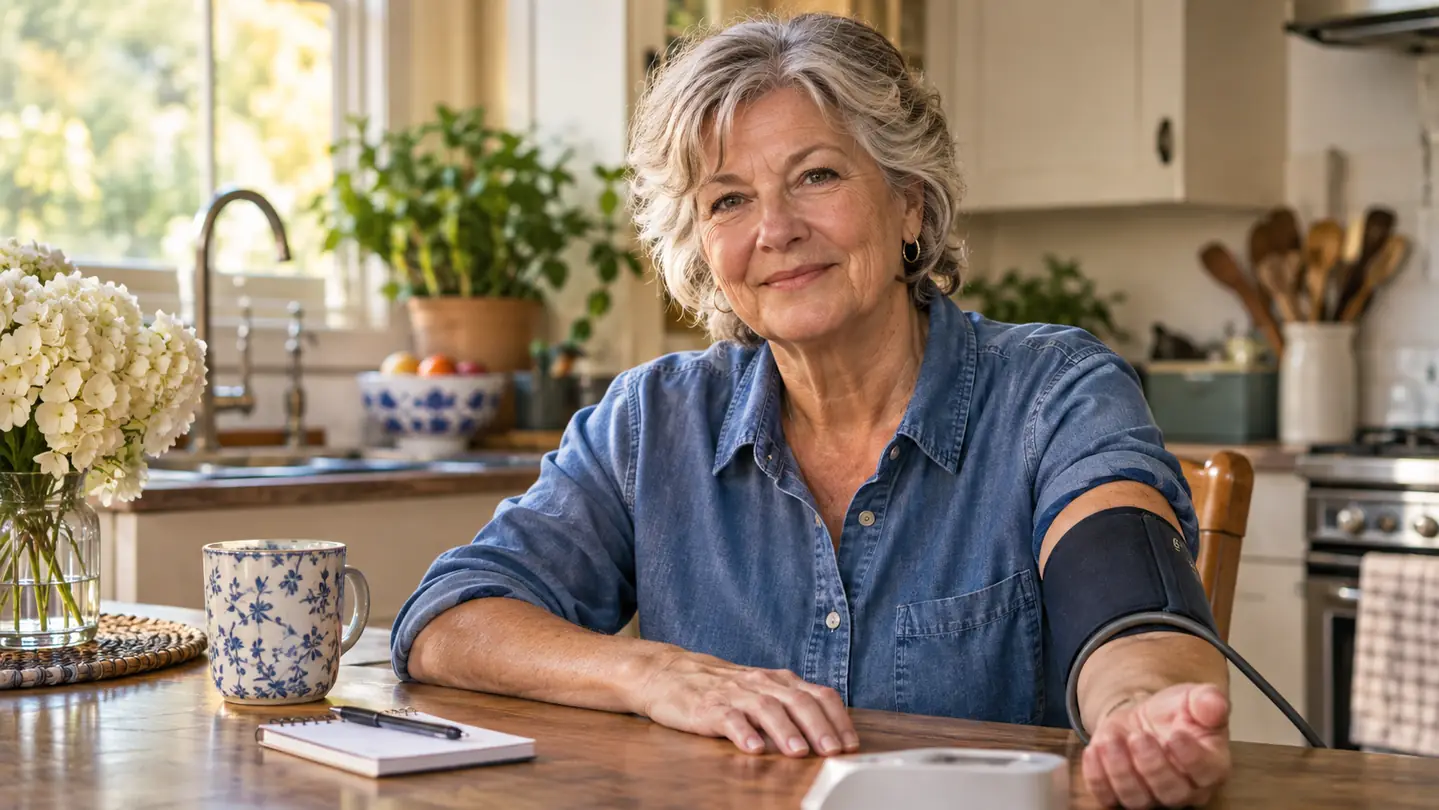
The first time my doctor told me my office readings were running high, I did what I always do. I went home and stewed about it at the kitchen table. Then he asked me to check twice a day for a few weeks and bring the log to my next appointment, and I realized I did not know the first thing about home monitors. That was a few years ago now. I am 67, retired from the bank in Lawton, Oklahoma, and what I have learned since is simple. A home monitor does not need to be clever. It needs to be boring enough that you actually use it at seven in the morning before your coffee.
Gene, my husband, checks his pressure too, so whatever we buy has to work for two people without a squabble. We went through a couple of machines before the Greater Goods upper arm monitor turned out to be the one that stayed in the kitchen drawer. Not because it does anything showy. Because it does the plain things well, and I can hand it to Gene or to a neighbor at the door without a lecture. Here are ten reasons it suits an everyday home routine, written the way I would tell a friend sitting across from me. One thing first, and I mean it. No monitor decides anything for you. You write the readings down and you take them to your doctor.
The monitor that stayed in my kitchen drawer
One button, two user profiles, and a cuff that fits my arm and Gene's. This is the machine I reach for before coffee, not the one I have to think about.
Amazon Check Today's Price on Amazon →One button from start to reading
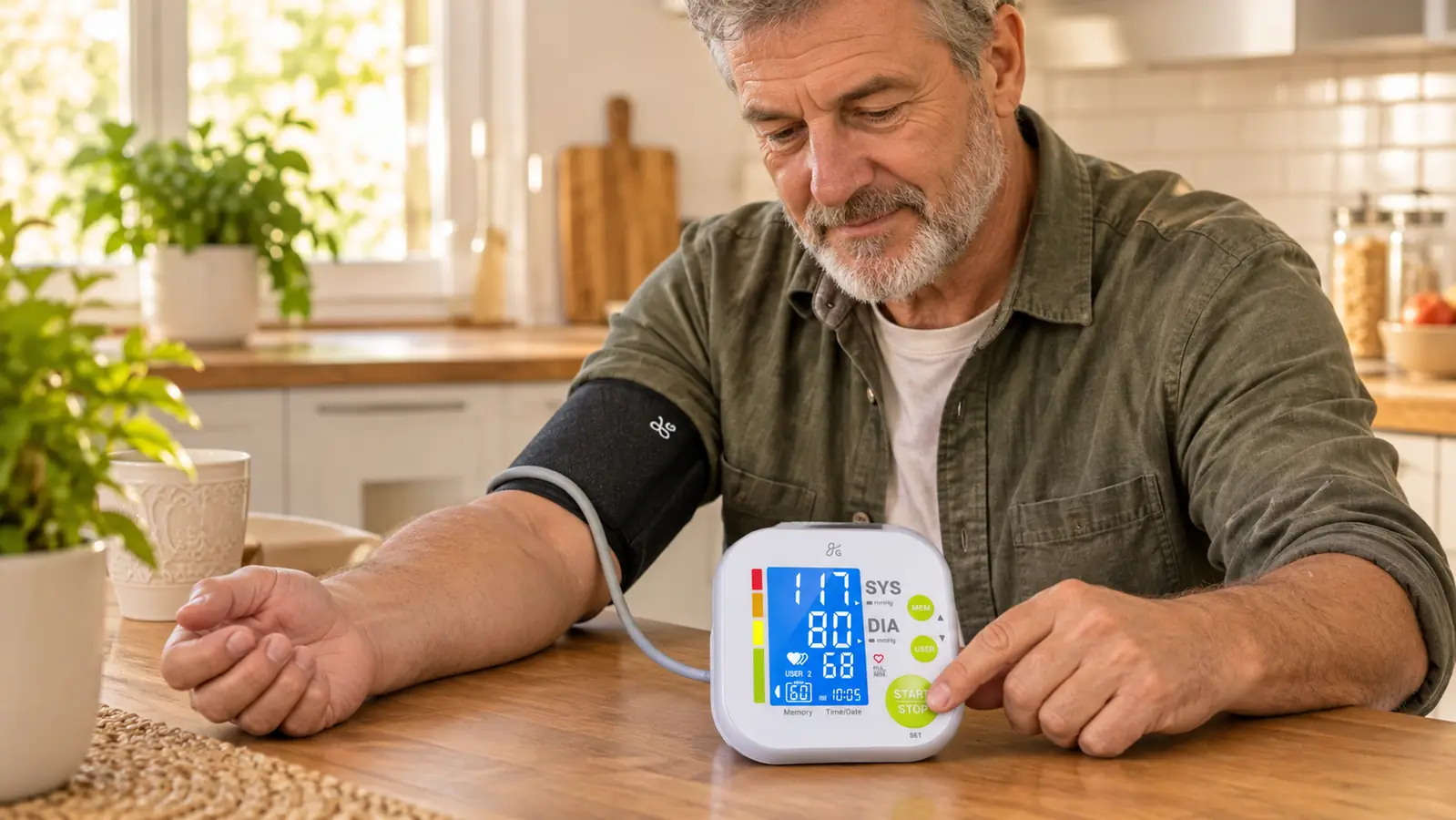
There is no sequence to memorize. You select User 1 or User 2, press Start, and the cuff inflates and deflates on its own. I have taken a reading half awake with my glasses still on the nightstand, which is the entire point of a morning routine. Anything that asks me to remember a menu at 6:40 in the morning gets left in the drawer.
Two profiles so our numbers stay separate
Gene and I share one machine, and the monitor keeps two separate user profiles with up to 60 readings stored for each, 120 in all. That sounds like a small thing until you have scrolled through a log with two people mixed together in it. When I sit down with my own history I want my mornings only. His readings are his business, and mine are mine.
Enough memory to walk into an appointment prepared
Checking twice a day, 60 readings works out to about a month of mornings and evenings. That is the difference between telling my doctor it seems a little high sometimes and handing her a page of actual numbers in order. I still write mine on paper, because that is how I was raised, but the memory means I am not squinting at a small screen trying to remember what Tuesday looked like.
The cuff fits both of us without a wrestling match
The Greater Goods cuff is sized for arms from 8.75 to 16.5 inches, or 22 to 42 centimeters. Gene's arm is bigger than mine and mine is not small. One cuff covers both of us without either of us wondering whether we are using the right size. If the cuff does not fit right, the reading is not worth writing down, so this mattered more to me than any other feature on this list.
It flags an irregular heartbeat
The monitor detects an irregular heartbeat and lets you know when it sees one. I am not going to tell you what that means for your health, because I am a retired bank teller, not a nurse. What I will tell you is that it gave me something specific to ask about at my appointment instead of a vague worry I could not put into words. That is worth having.
No cord stretching across the kitchen table
It runs on four AAA batteries, and they come in the box, so it works the day it arrives. That means no cord reaching from the wall to my elbow while I am trying to sit still, and no hunting for an outlet in a kitchen built before I was born. I have replaced the batteries once since we started using it. That is the whole maintenance story.
The case keeps the whole thing together in a drawer
It comes with a case, which sounds like filler until you have lost a cuff in a drawer full of spatulas. Everything goes back in one bundle: the monitor, the cuff, the batteries. Ours lives between the potholders and gets pulled out twice a day, and nothing has gone missing yet. That kind of small tidiness is what makes a routine hold.
Pulse rate comes along with the pressure numbers
Each reading gives you systolic, diastolic, and pulse rate in one go. I used to take my pulse by hand at the table the way my mother did, watching the second hand on the wall clock. Now it lands on the same screen as everything else and goes into the same log. One less thing to hold in my head before I have had my coffee.
Light enough to set down with one hand
The Greater Goods unit weighs 6.4 ounces and measures about 7.25 by 5.25 by 3.25 inches, so it sits in a corner of the table while I get my arm positioned. I have some nerve trouble in my left hand from years of counting cash, and I can set this down one-handed without it tipping over. Small and light is not a luxury at my age. It is the difference between using it and skipping it.
A plain screen, and nothing to pair with a phone
The readout is on an LCD screen with the numbers right there in front of you, and there is no app to open and no phone to fuss with. I know plenty of people my age who enjoy their gadgets. At seven in the morning I am not one of them. I want to press one button, see three numbers, write them down, and go start the coffee.
What I'd Skip
If you are shopping and feeling overwhelmed by the shelf, here is what I would skip. I would skip anything that stops being useful without a phone, because a monitor you have to troubleshoot is a monitor you quit using by the second week. I would skip a wrist cuff if your doctor asked for arm readings, since the Greater Goods monitor is an upper arm machine and an upper arm reading is what my doctor wanted to see. And I would skip paying extra for things that only matter to somebody with a spreadsheet habit. Two people, one button, and a month of memory is plenty for a kitchen table. If you want the longer version of how this machine has held up, I wrote that up separately, along with a straight comparison against the other cuff we tried.
Sixty readings per user means I walk into an appointment with a month of mornings in my hand instead of a guess.
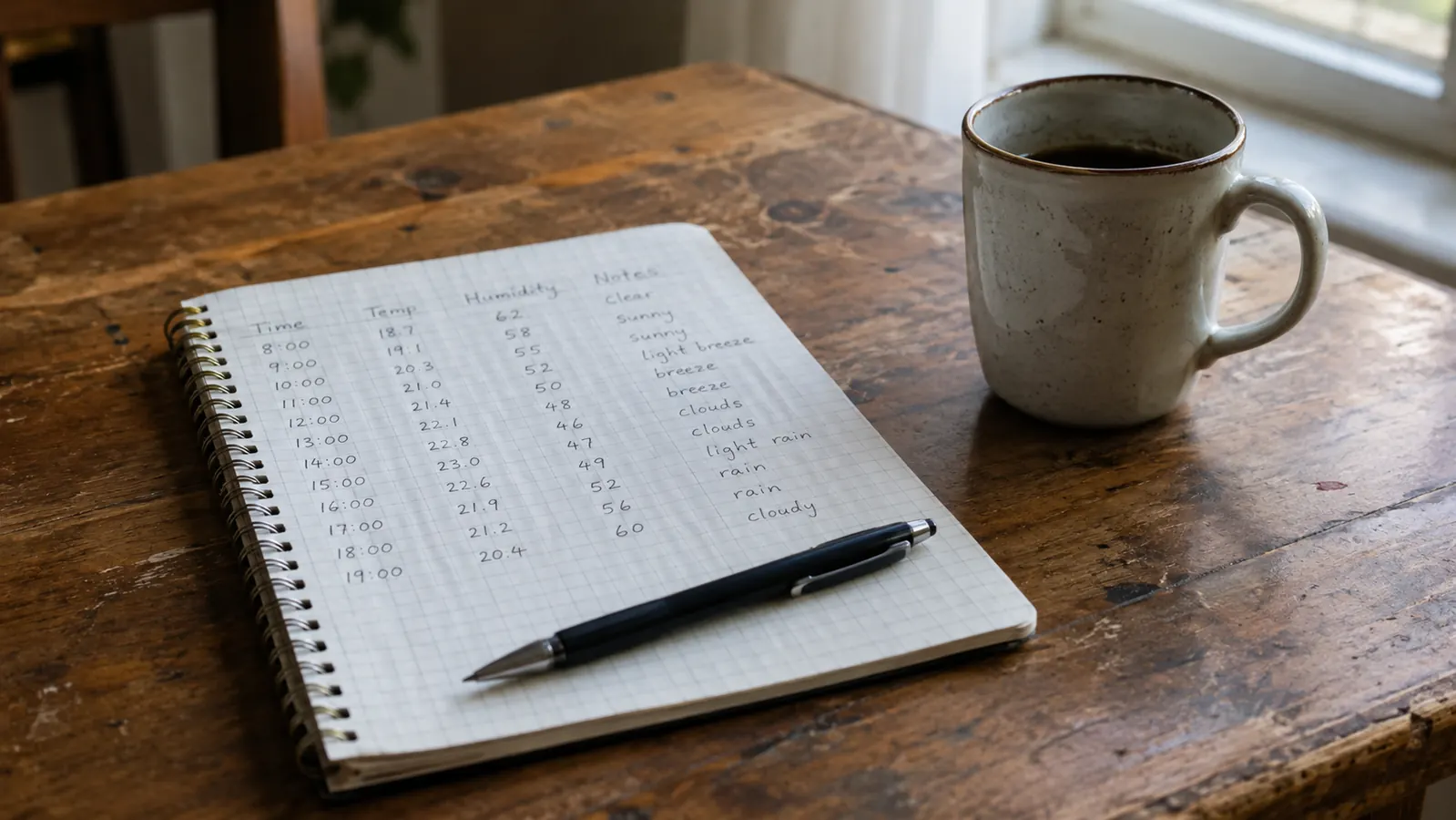
One last habit, and I think it matters more than the machine. I check at the same two times, sitting down, feet flat, arm resting on the table, cuff at heart height. I write the numbers on the same pad. When something looks different from my usual pattern, I do not panic and I do not start diagnosing myself at the kitchen table. I make a note beside it and I bring the whole pad to my doctor. That is what she asked for and that is what she gets.
If your doctor asked you to start checking at home, start with the plain one
You do not need a complicated machine. You need one you will actually use twice a day, with a cuff that fits and memory that holds a month of mornings. Write the readings down and bring them in.
Amazon Check Today's Price on Amazon →