

The first time my doctor asked me to start checking my blood pressure at home, I nodded, wrote it on the back of an envelope, and drove home without asking a single question. Twice a day. Same times. Write it down. Bring the log to my next visit. That was the whole instruction, and I still had no idea which machine to buy or how a person was supposed to work one.
I am Beverly Ostrander. I am 67, retired after thirty-one years as a bank teller in Lawton, Oklahoma, and until that envelope I had never owned a blood pressure monitor. My husband Gene is 70 and retired as well, and his doctor had told him the same thing. So we were shopping for one machine for two people, and it had to be simple enough that neither of us would quit using it by the end of the second week.
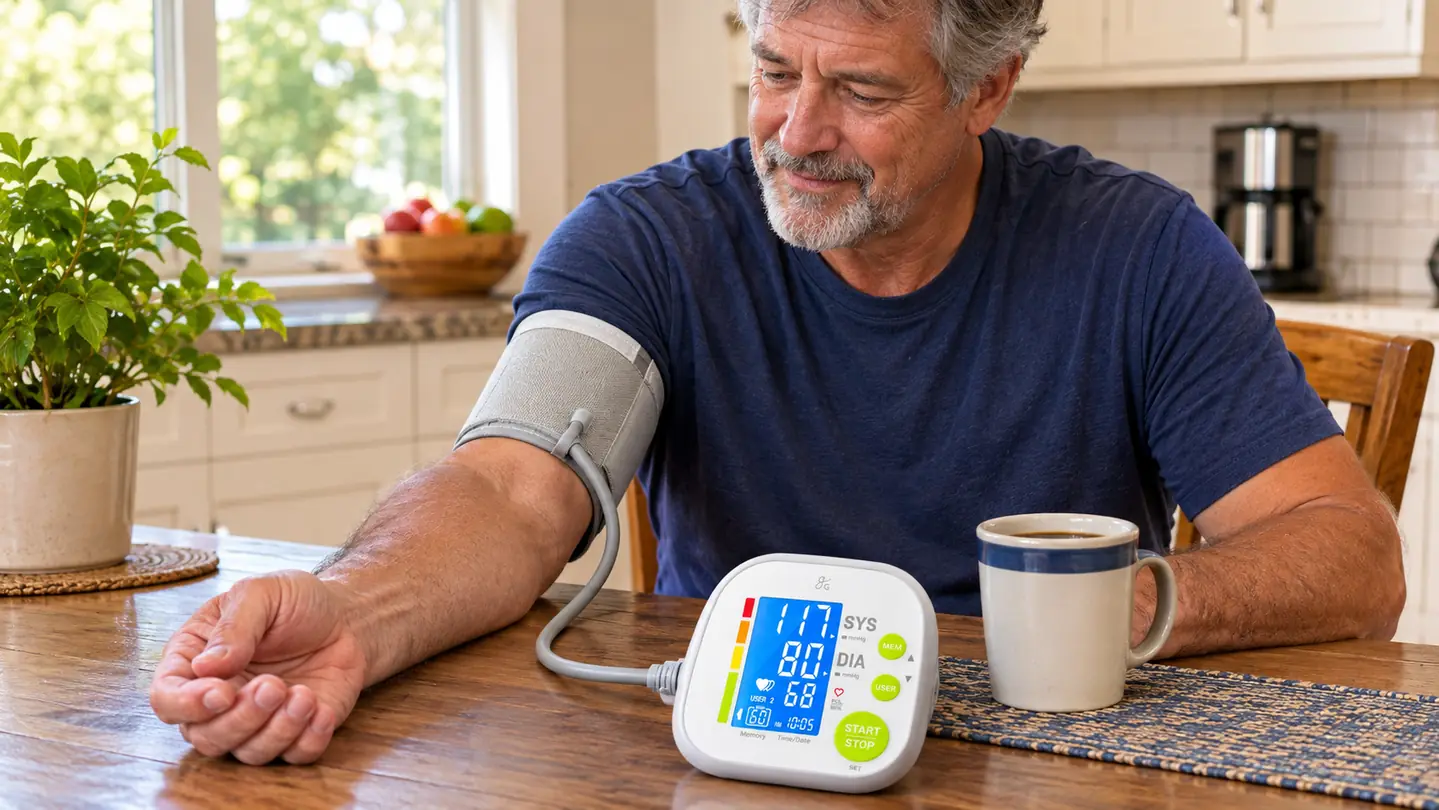
We ended up with the Greater Goods upper arm blood pressure monitor for home use. That was a while back. It has lived in the kitchen drawer ever since, and around here that is the highest compliment a piece of equipment can get. Things that go in the closet stay in the closet. This one sits two feet from the coffee pot, which is why it gets used.
I am not going to tell you it saved my life, because I am not a nurse and I am not going to pretend to be one. What I can tell you is what the thing is actually like to live with when you are 67 and your hands are not as steady as they were at 40, and how it fits into a morning that already has the radio on and Gene asking where his glasses went.
The part that made it stick was not really the monitor. It was the order of operations. I sit down before coffee, feet flat on the floor, arm on the table, cuff on the upper arm. Gene does his after his pills. We do not talk while the cuff is tightening, because talking shifts the reading and then you have wasted a cuff.
One button, two profiles, sixty readings each. I have not kept a paper log since the first week.
Two of us, one machine, no notebook
The Greater Goods upper arm monitor keeps a separate memory for each person, so Gene and I never mix up whose reading is whose. One button starts the whole thing.
Amazon Check Today's Price on Amazon →Here is the part I would have wanted to know before I bought anything. The monitor stores readings for two separate users, up to 60 each, 120 total. You pick User 1 or User 2 with the one button on the front, press Start, and the cuff inflates and deflates on its own. That is the entire procedure. I did not have to learn a menu, and Gene did not have to learn one either, which is the real test.
The cuff is the other thing that matters, and nobody explains this in the store. It fits an arm from 8.75 to 16.5 inches, or 22 to 42 centimeters if your manual is printed that way. My arm and Gene's arm are not the same size, not even close, and the same cuff works on both of us without me digging for a second one. It wraps above the elbow and the tube runs to the unit on the table.
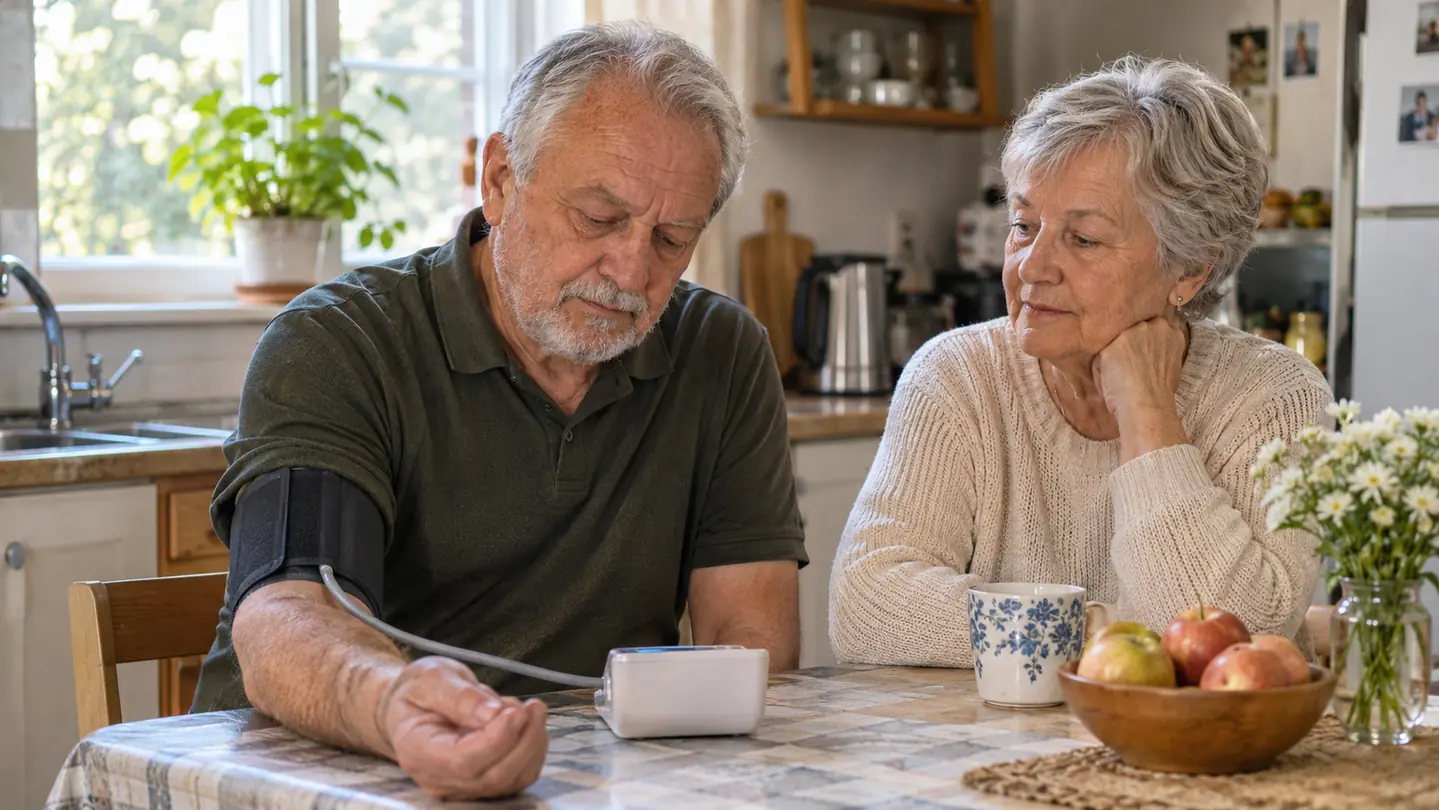
The display is an ordinary LCD screen with good-sized numbers, which sounds like a small thing until you are reading it without your glasses at 6:40 in the morning. It runs on four AAA batteries, and they come in the box, so there is no scavenger hunt on day one. There is a case in the box as well, though ours stays in the drawer without it.
One feature I want to describe carefully, because it startled me the first time it appeared. The monitor detects an irregular heartbeat and puts a symbol on the screen when it does. It is not a diagnosis and it is not a reason to sit at the table worrying. For us it has meant writing the date down next to the reading and handing the whole page to the doctor. That is what we do with every reading anyway. The number is information, not a verdict.
What I'd Tell You If We Were Sitting at My Kitchen Table
First, I would tell you to buy the boring one. You do not need a machine that talks to your phone. You need one that turns on, tightens, and gives you a number you can write down before you forget it. The Greater Goods monitor is boring in exactly that way, and boring is why it is still in the drawer instead of the closet.
Second, I would tell you to be honest with yourself about the log. The memory on this machine is the reason I stopped carrying a paper notebook around, but I still take the readings to my doctor. That is the whole point of doing it at home. You are not collecting numbers for your own entertainment. You are collecting something a person with a medical degree can look at and tell you what it means. Do not decide anything on your own at that table.
And third, I would tell you that the machine is the easy part. Two weeks in, the habit is what you are actually building. If a monitor makes that habit even slightly less annoying, it earns its spot in the drawer.
The drawer test is the only test that matters
Ours has stayed two feet from the coffee pot for months of mornings, one button and two user profiles doing all the work. That is the standard I would hold any monitor to. Then bring the readings to your doctor.
Amazon Check Today's Price on Amazon →