
For about a year, every reading I took in my doctor's office came back higher than the one before it, and I could not tell you whether that was me or the drive over. My doctor asked me to start checking at home twice a day for a few weeks and bring the numbers in with me. I said yes. Then I did what I think most people do. I wrote the readings on the back of a grocery list, in pencil, and I lost about half of them.
The day I handed that grocery list to the nurse, she held it at arm's length and asked me which reading belonged to which day. I could not tell her. That was the morning I stopped treating the log as paperwork and started treating it as the whole point of checking at home. The Withings BPM Connect is what fixed it for me, and not because it takes a better reading than the cuff in the exam room. It fixed it because it keeps the record so I do not have to.
You take the reading. It keeps the log. You bring it in.
The Withings BPM Connect reads your blood pressure on the upper arm, then syncs the numbers to the Health Mate app over Wi-Fi and Bluetooth. No notebook, no pencil, no grocery list in your purse.
Amazon Check Today's Price on Amazon →Five Steps, In the Order I Would Do Them Again
I am not a nurse and I am not going to tell you what your numbers mean. What I can tell you is how I got two weeks of readings out of my kitchen and into my doctor's hands in a form she could actually use, and which parts of that I would do exactly the same way if I had to start over tomorrow.
Step 1: Get the cuff and the app talking before you take a single reading
I opened the box at the kitchen table and did the pairing right there, which turned out to be the smartest part of the whole business. The cuff runs on batteries and comes with a charger, so there was nothing to hunt for and no outlet to crawl behind. Pairing is Bluetooth, and it takes a couple of minutes. You put the cuff on your arm once, sit still, and let the app find it.
Then let it onto your home Wi-Fi. This is the step people skip, and it is the step that matters most for sharing later. Bluetooth only works while your phone is sitting right beside you. Wi-Fi means the reading goes up to your account on its own while you are putting the cuff back in the drawer. I set that up once in my kitchen and I have never thought about it again since.
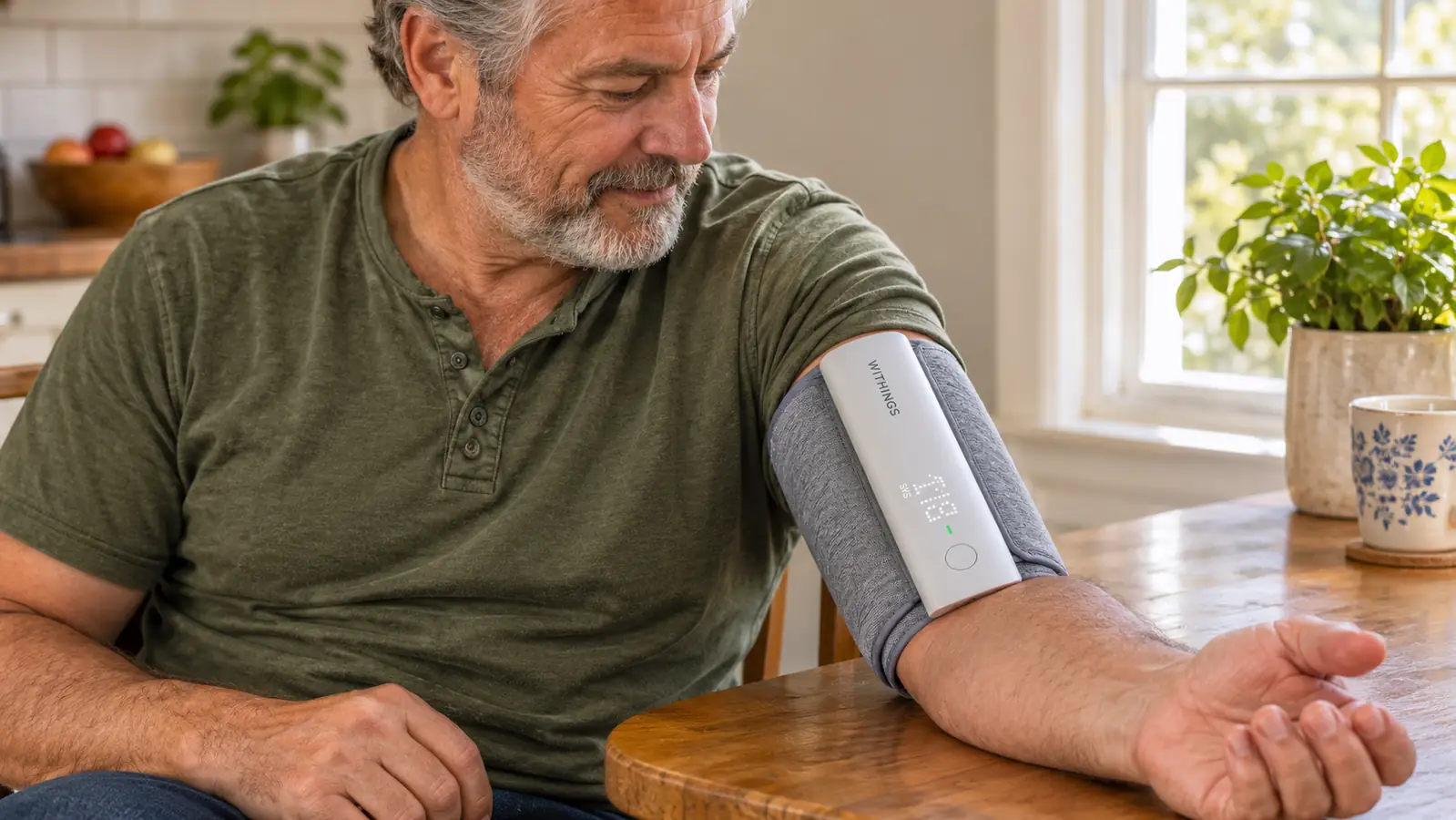
One thing worth checking while you are still at the table: the band is sized 22 to 42 centimeters, and it goes on the upper arm, not the wrist. Gene's arm and mine are about as different as two arms get in one family, and the same cuff fits us both. If it feels tight enough to leave a mark, or loose enough to slide when you move, say so to your doctor or pharmacist before you collect three weeks of numbers with a fit that was never right.
Step 2: Take the reading the same way, at the same two times, every day
My doctor asked for twice a day, so that is what I do. Morning before my coffee, and again in the evening before supper. Sitting at the kitchen table, feet flat on the floor, back against the chair, cuff on the upper arm with that arm resting on the table at about heart height. No talking, no phone in the other hand, no television argument going on in the background.
The sameness is the point. If you take one reading standing at the counter and the next one slumped back in the recliner, those two numbers are describing two different situations, and your doctor cannot line them up against each other. Same chair, same arm, same two windows in the day. That is what makes two weeks of readings readable instead of just numerous.
And take two readings a minute apart, then let it go. I used to sit there and re-take until I got a number I liked, which is not measuring my blood pressure, it is measuring my nerves. Keep what comes, then get on with your morning. Your doctor wants the pattern, not your best day.
Step 3: Let the cuff keep the record, and check once that it did
Here is where the Withings cuff earns its spot in the kitchen drawer. After the reading, the display shows the numbers with color-coded feedback, and the reading syncs across to the Health Mate app over Wi-Fi and Bluetooth. I do not write anything down. I do not keep a notebook in my purse. The record is already made by the time I am rolling the band up.
Check the app once. Not every day, just after the first few readings, to confirm the reading landed with the right date and time on it. Wi-Fi in a small one-story house is usually fine, but there is no harm in looking. If a reading ever fails to show up, take another one and jot the time on the back of an envelope, and you have lost nothing but a minute.
A practical note from my own kitchen: the monitor lives in the same drawer as the potholders and comes out twice a day, and it runs on batteries rather than a cord, so there is nothing to plug in, unplug, or trip over on the way to the coffee maker. The display is an LCD and I can read it without hunting for my glasses, which at sixty-seven is not a small thing.
Step 4: Turn two weeks of numbers into something a doctor can read in a minute
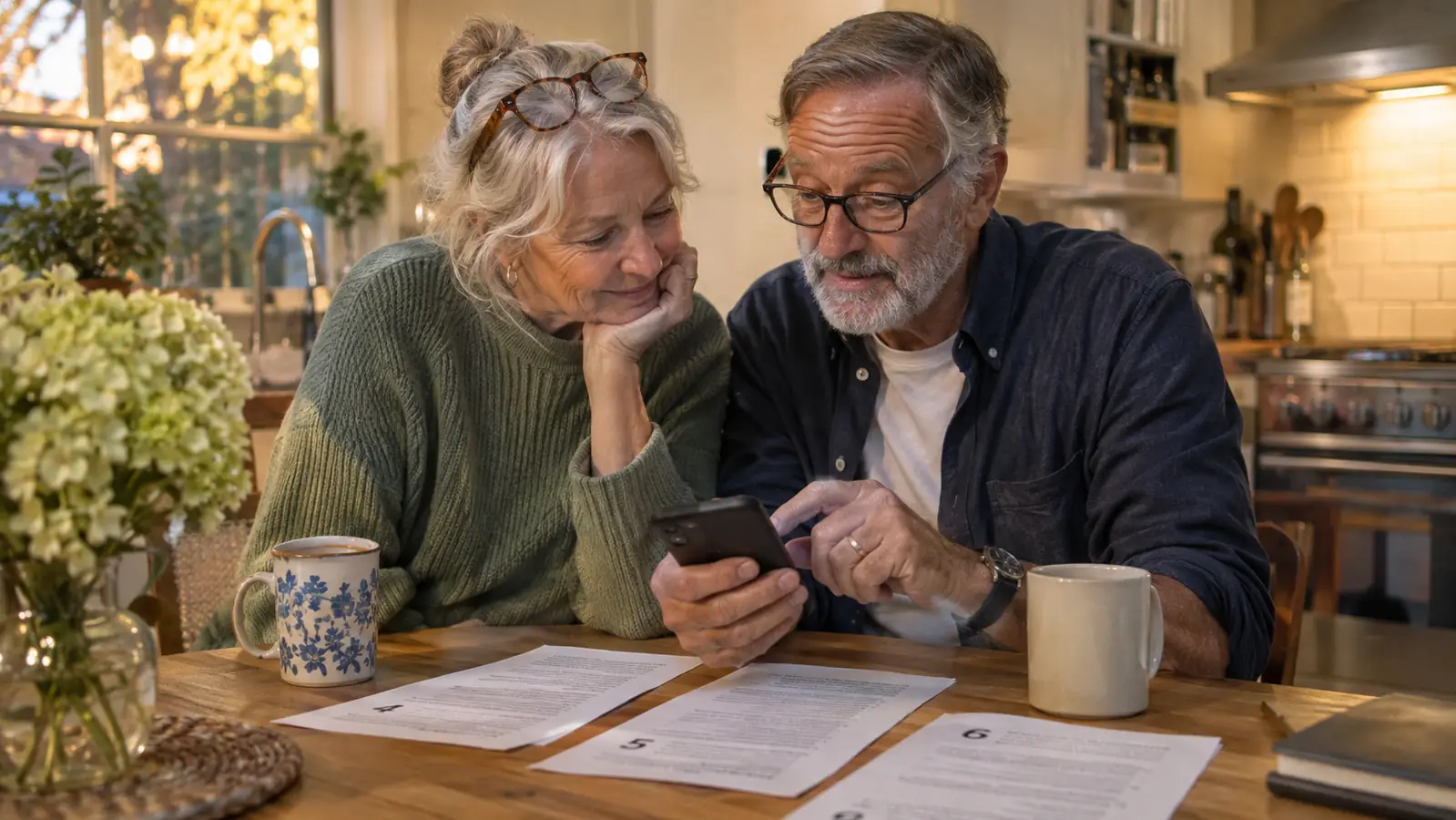
A pile of individual readings is not a log. A log has a shape. What my doctor wanted to see was the morning readings and the evening readings, day after day, so she could look at the pattern instead of one bad Tuesday that turned out to be a bad night's sleep.
So a day or two before the appointment, open the app and look at the history as a whole rather than one entry at a time. Print it if you have a printer that still works. If printing is a nuisance, screenshot the summary pages and put them all in one place, or send them to yourself in a single message so they are not scattered through your photos.
Then add a short note at the top of the first page. Not a story, just facts. The dates the readings cover, which times of day they were taken, and anything unusual in that stretch, such as a bad week of sleep, a cold, or a change in when you take your medication. I write those notes for the doctor, not to explain myself. If a stretch of readings looks odd to me, I say so and add that I do not know what it means. That is what the appointment is for, and it is not my job to have already solved it.
Two weeks of readings your doctor can actually scan is worth more than a year of numbers you meant to write down.
Step 5: Get the record into the exam room, not just onto your phone
There are three ways and I have used all of them. The first is to print the report and hand it over at check-in, so it goes into your file before the doctor walks in. The second is to share it out of the app the way your doctor's office prefers, and it is worth asking at the front desk what that is. The third is the simplest one: hand your phone to the nurse with the history screen already open, so nobody has to watch you scroll.
What I stopped doing was reciting numbers out loud from memory in the exam room. I would get to about the fourth one and start guessing, and guessed numbers are worse than no numbers because they sound like data. Let the record speak and keep your mouth shut about the exact figures.
One more thing I do now: I bring the cuff itself to about one appointment a year. It takes up no room in my bag, and the nurse can check my fit against the cuff they use in the office in under two minutes. With a band that runs 22 to 42 centimeters, arms at either end of that range are worth a second look. Then ask the question that actually matters at the end of the visit: do you want me to keep going twice a day, or can I drop to once?
What Else Helps
Everything below is what my own doctor's office told me, or what I learned by getting it wrong first. Your doctor may want something different, and their instructions win over mine every time.
Sit still for a few minutes before the first reading rather than taking it the second you sit down. Use the restroom first. Skip the coffee and the cigarette for a half hour before, if you can manage it. Keep both feet on the floor and do not cross your legs, and do not talk during the reading, which is harder than it sounds when someone in the next room is asking you a question.
Use the same arm every time, and tell your doctor which arm it is. Most offices use one arm and stick with it, and it helps if yours matches theirs. I marked mine with a little dot of nail polish on the inside of my wrist for the first month, which Gene found funny until he borrowed the cuff and could not remember his own.
And lean on consistency more than volume. Twelve readings taken the same way at the same two hours will tell your doctor more than forty readings grabbed at random moments. If you fall off for a week, do not start over and do not apologize. Pick the routine back up and keep the gap in the record, because a gap the doctor can see is honest and a gap you filled in from memory is not.
The last thing, and the one I had to learn the hard way: bring questions to the appointment, not conclusions. I spent a whole visit telling my doctor what I thought a run of readings meant, and she had to walk me back from it before she could tell me anything useful. Now I bring the printout and a short list of questions and let her do her job. That is what the readings are for.
Two weeks from now, you could be walking in with a printout instead of an apology
The Withings BPM Connect takes the reading on the upper arm and syncs it to the Health Mate app over Wi-Fi and Bluetooth, so the log builds itself while you get on with your day. Bring the numbers to your doctor and let them tell you what they mean.
Amazon Check Today's Price on Amazon →