
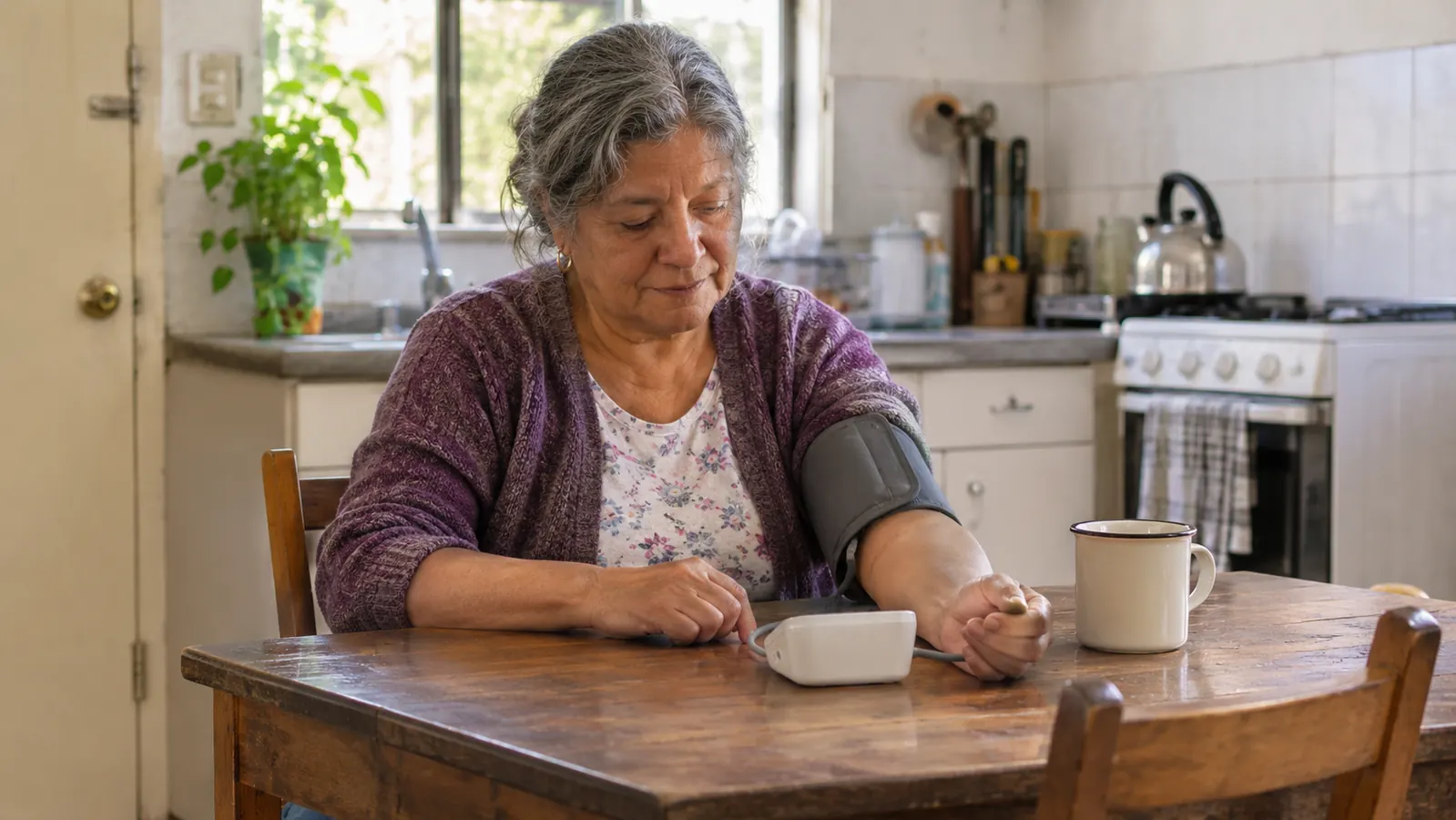
The first time my doctor told me my numbers ran high in his office, I did what I always do when something flusters me. I went home, sat down at the kitchen table, and made a list. Twice a day, he said. Morning and evening for a few weeks, and bring the log back in. That was the whole assignment. I had no idea how to do it.
Gene, my husband, is seventy and checks his too. We are not gadget people. We have a landline, a good pair of scissors in the junk drawer, and a stack of instruction manuals we have never once opened. So when I went looking for a home monitor, I was looking for something I could work before my coffee. That is how the Omron Gold wrist monitor ended up in the kitchen drawer next to the takeout menus.
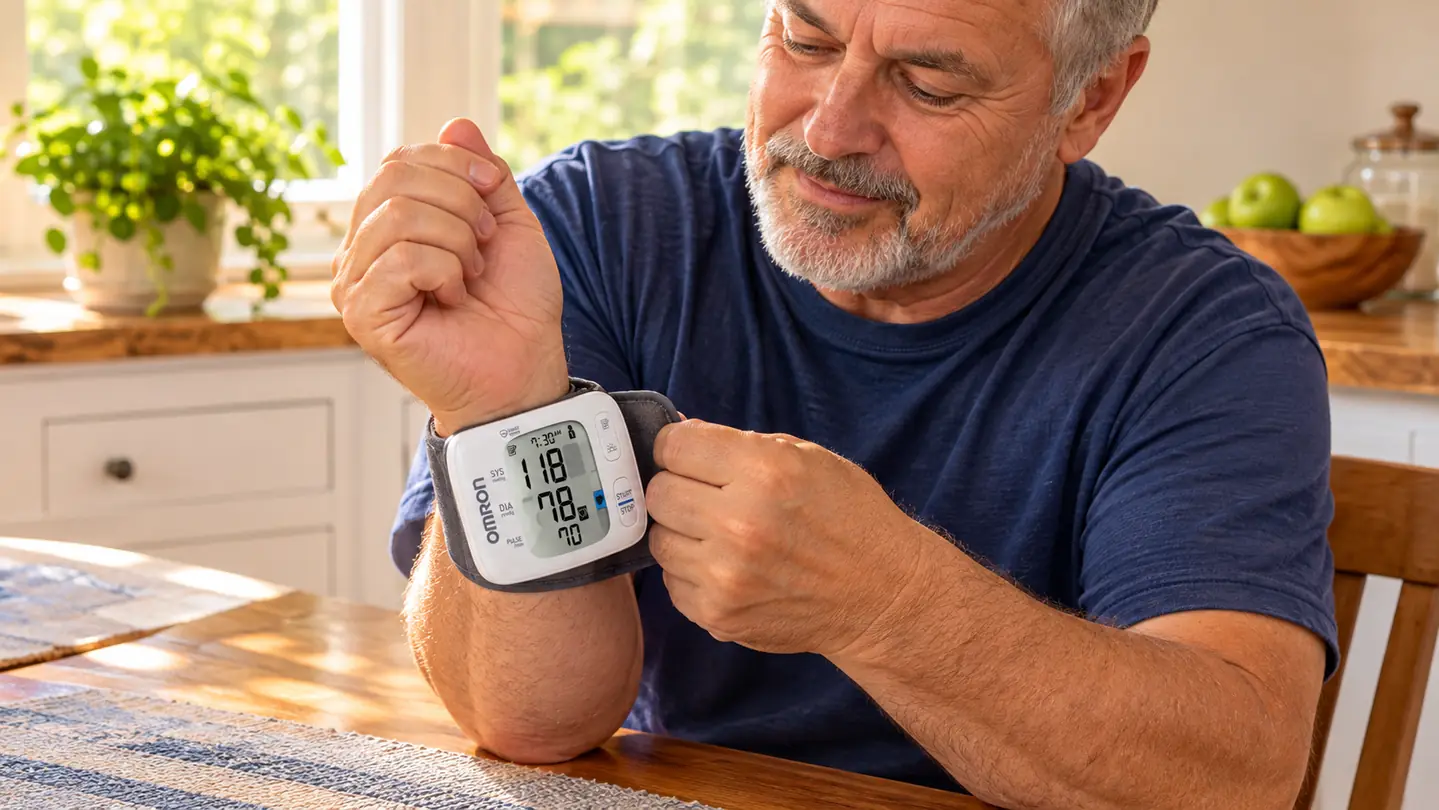
An upper arm cuff is the standard. I know that. The one I borrowed from my sister had a tube running up to a little box, and I could never get the cuff positioned the same way twice on my own. First it slipped. Then it was too tight. Then I was redoing it one-handed with my sleeve bunched up around my elbow, which is not how anybody wants to start a morning. The wrist version wraps, closes, and stays where you put it. It weighs about three ounces and it comes with a case, so it lives in the drawer instead of tangled at the bottom of it.
Here is what our morning looks like now. I sit at the table with my feet flat on the floor and my arm resting on the wood. I put the cuff on my left wrist, press the button, and hold still. It takes less than a minute. Gene does his right after me and we write both numbers on the same pad by the salt shaker. It is boring, in the best way. A routine you dread is a routine you quit, and this one does not give me a reason to dread it.
I asked my doctor whether a wrist cuff was a waste of time next to the arm cuff in his exam room. He said the home readings are the useful part, as long as I use the same method every time and bring them in. That settled it for me. I have stopped trying to referee the two of them myself.
Two hundred readings stored for each of us, and I still write mine on the pad. The pad is for me. The memory is for the appointment.
A twice-a-day habit only works if it is easier than skipping it
The Omron Gold wrist monitor wraps on, takes the reading, and goes back in the drawer. Two users, up to 200 readings each, nothing to assemble at six in the morning.
Amazon Check Today's Price on Amazon →The part I did not expect to care about is the memory. It stores up to 200 readings for each of two users, so Gene's numbers and mine stay separate without either of us keeping score. I still write mine on the pad, because the writing is how I hold it in my head, but I stopped worrying about a slip of paper going missing between the table and the truck. There is also a high morning average indicator that gathers the morning readings into one figure. Morning is the window my doctor asked about, so that feature is aimed straight at his question.
The irregular heartbeat indicator is the other one. It flags an irregular rhythm during a routine reading. I am not going to tell you what any of that means for you, because I am a retired bank teller and not a doctor, and I would be guessing. What I do is take the reading, write it down, and bring the whole thing to my appointment. He reads it. I pour the coffee. That division of labor has worked fine.
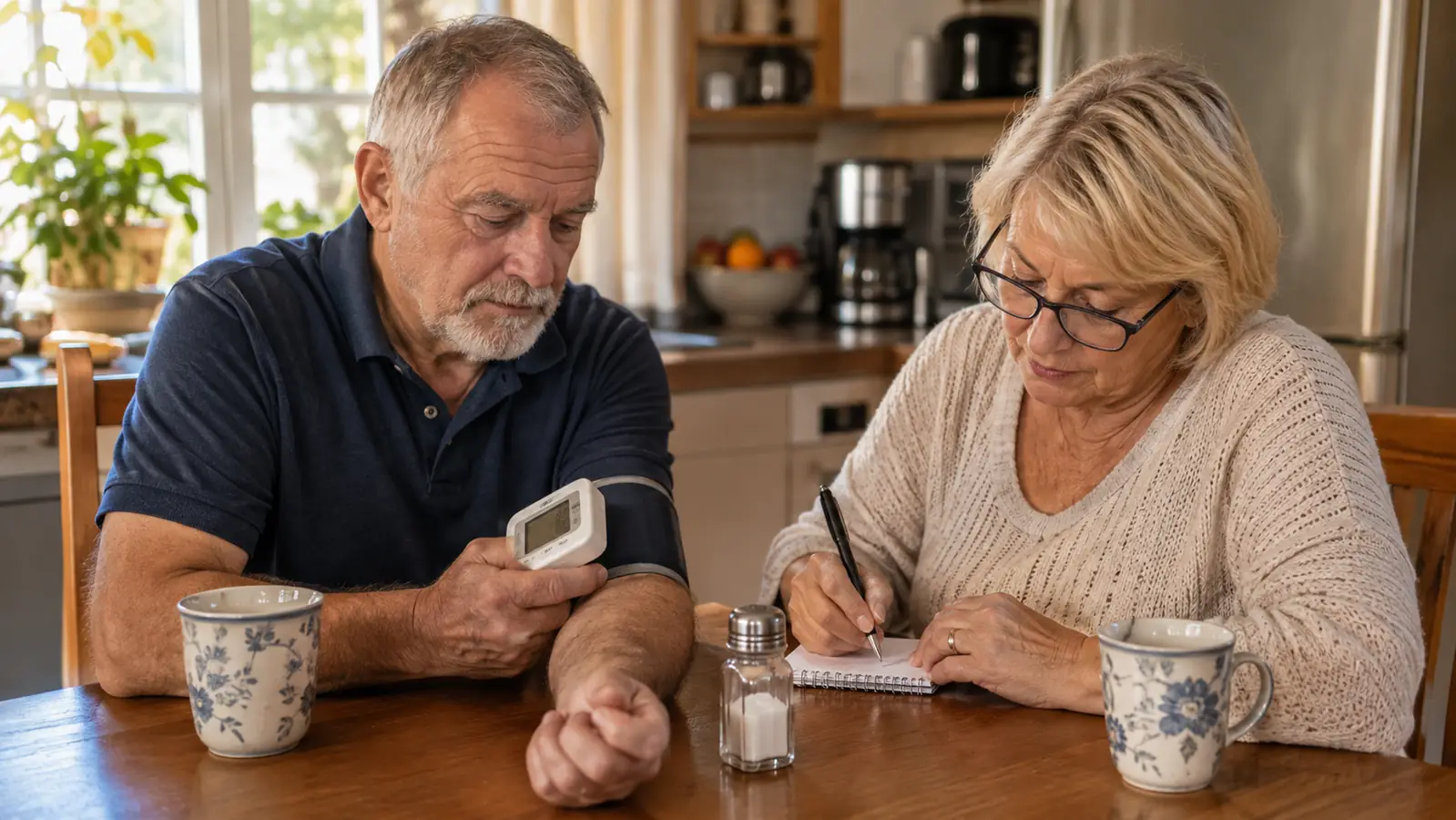
It is not perfect, and I want to be straight with you about that. The display is small, and on the first morning I had to go find my reading glasses before I could see it. It runs on two AAA batteries, which came in the box, and I keep a spare pair in the drawer because a dead battery at six in the morning would end the streak. The band is listed at 8.5 inches and it fits both of us, though Gene's wrist is thicker than mine and he closes it on a looser notch. A wrist reading is also more particular about position than an arm cuff. I rest my forearm on the table and keep still. I do not take a reading standing at the counter with the radio going. Small things, but they matter.
If your doctor has asked you to check at home, my advice is not to make it a production. Pick a chair. Pick a time. Put the thing where you will trip over it. For us it is the kitchen drawer, and the kitchen drawer is the reason it happens at all.
What I'd Tell You If We Were Sitting at My Kitchen Table
I would tell you that the number on the screen is not a grade. It is a note. You are collecting notes for someone who can actually read them, and one odd morning does not undo three weeks of steady ones. I would tell you to bring the log, even the messy handwritten version, because a doctor can work with a messy log and cannot work with a number you half remember from Tuesday.
I would also tell you to buy the one you will actually use. A monitor that lives in its box on a shelf and comes out for special occasions is a paperweight with a screen. For us that turned out to be the Omron Gold wrist monitor. It is in the drawer with the menus, it takes less than a minute, and both sets of readings are already in it when we sit down at the appointment. That is the whole review. Gene has stopped asking me where it is, which in this house counts as a rave.
And I would tell you the same thing my doctor told me, which is that none of this replaces the visit. Take the readings in. Let the person with the training do the interpreting. That is the arrangement, and it has kept me calm for a good while now.
Start with one morning and see if it sticks
Same chair, same time, both sets of readings kept separate. Bring the log to your doctor and let them read what you collected.
Amazon Check Today's Price on Amazon →